
Image

A typical CV of two pages is what an employer expects, but there are times when presenting your CV in a creative way or alternative format can help you stand out from the crowd, especially in creative industries such as design, art and architecture. If done well, this can show off your talents and get you noticed in your desired field.

Before applying to any role it is first important to consider whether a ‘creative’ or ‘traditional’ CV would be most effective. Some of the questions you may ask include:
Is the role within an industry where a creative/alternative CV would be expected?
Does a creative CV complement the company/role you’re applying for?
Does it reflect the most positive impression of you and your work?
Creative or alternative CV formats can be particularly effective when using a speculative approach in your job search to help you stand out from the crowd.
Your creative CV is a great way to showcase your skills. The layout and design can help highlight your strengths, but keeping it clear and easy to read is important, as employers still need to find key information quickly. Use simple design elements like a well-chosen font, a touch of colour, or a subtle background. You can also add small images of your work to encourage employers to explore your portfolio. The content of your CV should be the main focus - any visual elements should support your words, not distract from them.
Like a traditional CV, your creative CV should be tailored to the job and industry you’re applying for. Show evidence of your skills and experience, and explain how you’ve applied them throughout your degree, work experience and any relevant extracurricular activities. Read our CV Writing Toolkit for more advice on what to include and how to present your experience effectively.

Take a look at our Creative CV examples for industries including Computer Games Design, Fashion & Textiles and Graphic Design.
These examples show creative ways to adapt a standard 2-page CV format.
Each of the creative industries has ways in which you can tailor your CV design. You can get more information about getting into these industries through our Career Guides. Below you will find links to more general resources to help you make a creative CV.
Below is a list of useful links to help you create your CV according to the industry you are applying for.
Presenting a CV in an alternative format showcases your creativity and technical skills - design, videography or web development.
Before creating an alternative CV it is essential to feel confident in your CV writing abilities first. Once you can sell your strengths and skills on paper, you can apply them more creatively in an alternative format.
Below are some of the alternative formats you can use when developing your CV
The Portfolio or ‘Taster’ CV is the second most common CV type used. You'll often be expected to present a Portfolio or Taster CV when seeking work within the design and creative industries.
A Portfolio CV follows the same format as a standard CV (one or two sides of A4 selling your key skills and achievements) but with more visual and design elements. Adding images of your work to your CV and/or adding a design to your document are a couple of the ways this can be achieved.
Visit our Portfolio Guide to get tips and advice on creating your professional portfolio.
Video CVs offer an excellent way to promote your brand and can help you stand out among the competition.
They work particularly well for roles within the creative industries and for those with a large customer focus such as sales, media and marketing.
If you create a video CV, make sure it's easy for employers to access and that your content can't be edited or altered once it is uploaded.
LinkedIn is an ideal platform where you can use video to promote examples of your work or demonstrate your creativity. You could use video to highlight examples of your work, reflect on your experiences, or share short, themed insights related to your career interests.
The article How to Use LinkedIn Video to Boost Engagement offers practical tips and examples.
Create a Great Video CV - Prospects
The Dos and Don’ts of Video CVs - TopUniversities
Interactive CVs engage employers by encouraging them to explore and interact with your content. This approach can help your CV stand out whilst giving you the chance to demonstrate your creativity and technical skills.
The interactive features you use should reflect the industry you are targeting. For example, if you're applying for a computing or gaming role, a game-style CV that allows the reader to navigate using controls could be effective. A well-known example of this type is from Robby Leonardi, who has created a character that you control to lead you through different areas of his CV.
For other sectors, simpler interactive elements may be more appropriate, such as Nick Jones’ use of rotation in his CV which provides an effective and alternative way to introduce his abilities as a Web Designer.
A few other stand-out examples have been listed below:
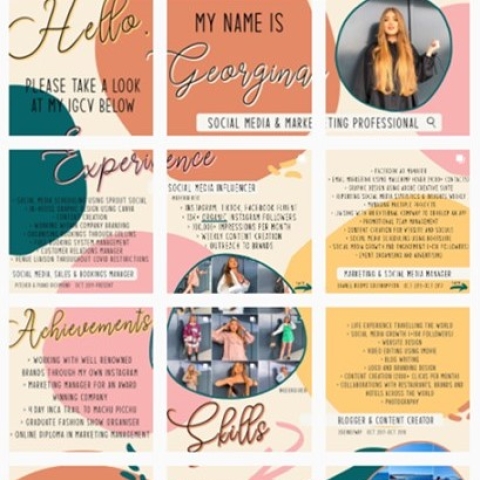
Instagram is increasingly being used by graduates as a tool for job searching. An Instagram CV (IGCV) can be an effective way to showcase your personal brand, and get noticed by graduate employers within certain sectors. It's best to create a separate account for your IGCV to keep it distinct from your personal profile.
As with any creative CV, aim for a balance between design and content. Your IGCV should be visually engaging while clearly demonstrating your skills and experience. Bear in mid that content usually needs to span 9-12 squares, so plan your layout carefully and avoid splitting text across multiple squares.
Once you have designed your IGCV, apps such as 9Cut Insta, 9Square or Photo Split can help you divide your CV into squares and upload them in the correct order.
Example IGCV design:
Check out our CV Writing Toolkit, with 6 key steps to ensure you have a standout CV!

Our advice on creating a strong portfolio that will help you stand out from the crowd.

Explore more than 40 industry guides and learn about the knowledge and experience you need to find a job in your dream sector.

Turn on notifications for critical updates like closures, safety alerts, and urgent service disruptions.